Thursday, October 31, 2013

Game Dev. Analysis

Riot games is based in Santa Monica, California with offices in St. Louis, Texas and abroad. They are the company behind the wildly popular MOBA League of Legends and currently employ over 1000+ employees worldwide. Riot has there own in-house audio team consisting of around 20 'audio mixer's', designers and composers.


From an audio standpoint, league is incredibly diverse. Considering there are over 115 different characters in the game, each with 10-15 lines of dialogue each, including taunts, jokes, and death groans, not to mention each character has 4 unique abilities which all require there own sound effects; creating the audio for just one LoL character is a huge undertaking.

Personally I've played League for about 2 years, and one day I hope to work at Riot's Santa Monica office as a modeler or texture artist.


Sunday, October 27, 2013

Game Engine Analysis


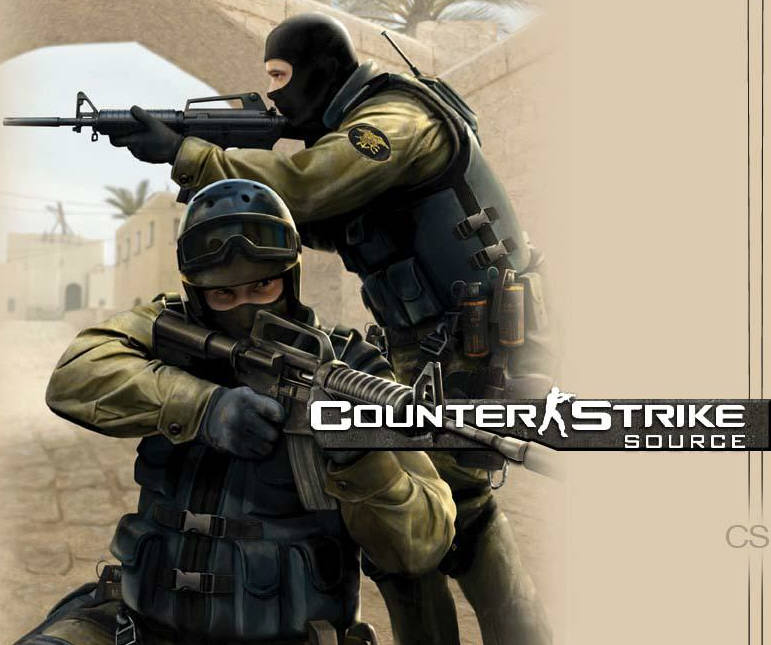
The source engine developed by the Valve Corporation is most notably associated with the games Counter Strike: Source, Half-Life 2, Team Fortress 2, and the Portal series. The Source engine is known for the ability to render HDR lighting setups and an advanced facial animation, and lipsync editor. As far licensing the source engine, the exact cost is shrouded by an non-disclosure agreement, in order to use the engine you'd have to contact Valve personally. To get a feel for the engine however you can purchase Garry's Mod on Steam for about 10 bucks, which is basically a watered down Source Dev Kit.


Compared to other engines, Source is primarily built for FPS games, and there it shines especially in the context of multiplayer and co-op; both the Counter-Strike and Left 4 Dead series are evidence of this. While the graphic capabilities of the engine are definitely strong, I wouldn't say that graphics are the main selling point. It's the ability to play smoothly online with friends, facilitated by the Steam interface of course. The Source engine is highly optimized for high latency situations, with accurate projectile prediction capabilities even when working on unstable networks.

As far as audio capabilities the Source engine supports 2D, 3D and 5.1 stereo surround sound with pre-rendered Doppler effects. Supported API's include FMOD and OpenAL. The source engine also includes it's own audio editor called Vaudio for scripting ambient loops and trigger events.


Sunday, October 20, 2013

Analysis of Machinarium

Machinarium is a unique little browser intergrated, puzzle/adventure game. The game's mechanics, dark yet comical atmosphere and sound design were all well put together. The soundtrack in particular fits the game well, it's simplistic but conveys a sense of isolation and wonder, as you navigate your unfortunate robot through the barren landscape. From the 3 levels I played, it seems like there is a different score for each stage; most are very ambient and electronic with small rustlings and clangings of metal to accent the quirky melodies.The music in the third stage in particular was my favorite. It had a more upbeat tempo, and arabian undertones with the melodies and percussion.


In addition to having enjoyable music, the game is full of small sound effects, from a robot mouse scurrying around, to oil dripping from a leaky pipe. The sound design is as rich as the hand drawn backgrounds. In addition, clicking on things produces sound, which can help you solve the puzzles. If an object is usable or clickable it will usually make a noise; like flipping a lever, or uncovering an important piece under some loose scrap metal. Your character also makes a buzzing noise and shakes his head when you do something incorrect, or try to combine two incompatible objects. 

The sound effects fit the game well too, seeing as it appears to be a future world run by robots, everything you can click is creaky and rusty. The wheels on the little supply tram rattle as they whistle by, your robot clanks along as he walks, etc. All in all I enjoyed the game, and found the puzzles engaging. If I wasn't broke I'd probably play through the whole thing.


Sunday, October 13, 2013

Analysis of a Post 1994 Game: Warcraft II

I'll always have a soft spot in my heart for Blizzard games. The level of detail in the cinematics, gameplay, and characters has always astounded me. The first Blizzard game I remember playing was also one of the first games I ever played on PC. Warcraft II: Tides of Darkness was a huge step forward from it's predecessor Warcraft: Orcs and Humans. The warcraft franchise is largely considered the forerunner of the RTS genre, games that revolve around resource collecting and army building. Warcraft II featured land, sea, and air units; over 30 in all.


As a kid, I think my favorite part about playing Warcraft was how every unit had it's own personality and voice-overs. Clicking on or moving a unit would play a random voice-over, but the best part was after clicking on a particular unit several times in a row, the character would usually get more agitated and say funnier and funnier lines. Every time I would unlock a new unit, you could be sure the first thing I'd do was click on him repeatedly to hear the rare voice-overs. In all, the game had 291 unique voice-over lines. Pretty huge for a game released in 1995. Here's a video featuring every single spoken line of dialogue.


In addition to spoken word, every character had unique sound effects for their attacks, spells and death animations. The soundtrack for the game was also epic and extensive. To say Warcraft had a massive amount of sounds for it's time is an understatement. In addition to in-game sounds, Warcraft II like many Blizzard games featured brilliant cinematic sequences between levels and at the start of the game; each with music and story-driven dialogue voice-overs. Just rewatching some of the videos on this game on youtube bring back huge amounts of nostalgia, Warcraft II in my opinion was way ahead of it's time, and will always have its place among my favorite games of all time.


Sunday, October 6, 2013

Analysis of a Pre 1990 Game: Mega Man

Analysis of a Pre 1990 Game: Mega Man

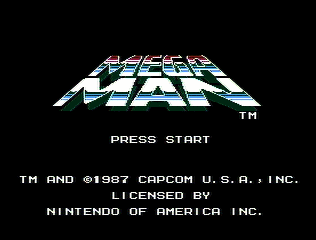
Mega Man is a game that has always been near to my heart. Although I never owned a NES I remember spending countless hours as a kid trying to find working emulators and roms for my Windows 95 PC. The original Mega Man was released in 1987 and was the first in a long line of Mega Man games to come.


Upon starting the game up the player is greeted with a myriad of intro music, and menu bleeps. When a stage is selected and loaded up new music plays. Every song for each level is different and fits the theme of the level. The music for the Electric Man stage, features techo-esque drums and a fast paced melody. The Fireman level music is very fast paced and features a driving rhythm from the bassline and percussion. Each song is easily recognizable and they're all pretty catchy, I remember playing back through levels just to listen to the different themes as a kid.

Music aside this game has a ton of sound effects, and they're all played overlapping the music. The NES was able to support 5 audio channels at once, and I believe Mega Man made use of almost all of them. The layering of sound in this game is really nice. For example you can simultaneously hear level music, weapon sounds, explosions and jumping bleeps. 
To talk about the sheer amount of sounds in the game, the amount of sounds for your arm cannon alone is ridiculous for a game from this era. A key component of the Mega Man franchise is collecting the powers of the bosses you've slain. Killing Cutman for example gives you the ability to switch your cannon to Cutmode, which changes the projectile behavior, speed and most importantly for this sound effect. Each of the 8 weapons in the original Mega Man act and sound differently, which was always a huge draw for me. I loved that you could play each level differently, and that sometimes switching weapon on the fly was the best way to get through a stage. With that and all the different sounds for different enemies and bosses I feel like Mega Man was definitely a huge step forward in for sound in games.